Low-Calorie Foods: The Ultimate Guide to Eating More While Losing Weight
I used to think losing weight meant being hungry. All the time. I’d eat my sad little 400-calorie dinner and spend the rest of the evening staring at the clock, counting down until I could “legally” eat again. It was miserable, unsustainable, and honestly – it didn’t even work that well.
Then I discovered the concept of energy density, and everything changed.
Here’s the simple truth that nobody told me: a calorie isn’t just a calorie when it comes to how full you feel. 500 calories of broccoli takes up your entire stomach. 500 calories of chocolate fits in the palm of your hand. Your body doesn’t just count calories – it pays attention to volume, weight, and how much space that food takes up.
This guide is everything I wish I’d known years ago. I’ve spent countless hours researching, testing, and eating my way through the science of satiety. The 15 foods on this list aren’t just low in calories – they’re strategically chosen to trigger your body’s fullness signals, stabilize your blood sugar, and keep you satisfied for hours.
No more hunger. No more misery. Just delicious, abundant food that happens to support your weight loss goals. Let’s dive in.
What Makes a Food “Keep You Full”?
Before we get to the list, let’s understand the science. Foods that keep you full share three key characteristics:
1. High Water Content
Water adds weight and volume to food without adding calories. A bowl of watermelon and a handful of almonds might have similar calories, but the watermelon fills your stomach completely while the almonds barely register. Water-rich foods stretch your stomach and trigger stretch receptors that signal “full” to your brain.
2. High Fiber Content
Fiber is indigestible. It passes through your system slowly, taking up space and delaying gastric emptying. It also feeds your gut bacteria, which produce compounds that signal satiety to your brain. High-fiber foods keep you fuller, longer – period.
3. High Protein Content
Protein has the highest thermic effect of any nutrient, meaning your body burns calories just digesting it. It also triggers the release of satiety hormones like PYY and GLP-1 that tell your brain “stop eating.” Protein-rich foods are the heavy hitters of fullness.
4. Low Energy Density
Energy density is simply calories per gram of food. Foods with low energy density (think vegetables, fruits, lean proteins) give you a large volume of food for few calories. Foods with high energy density (think oils, nuts, chocolate) pack many calories into a small space. For weight loss, you want to fill up on low-energy-density foods.
The 15 Best Low-Calorie Foods That Actually Keep You Full
1. Leafy Greens (Spinach, Kale, Lettuce)
Calories: 5-10 calories per cup
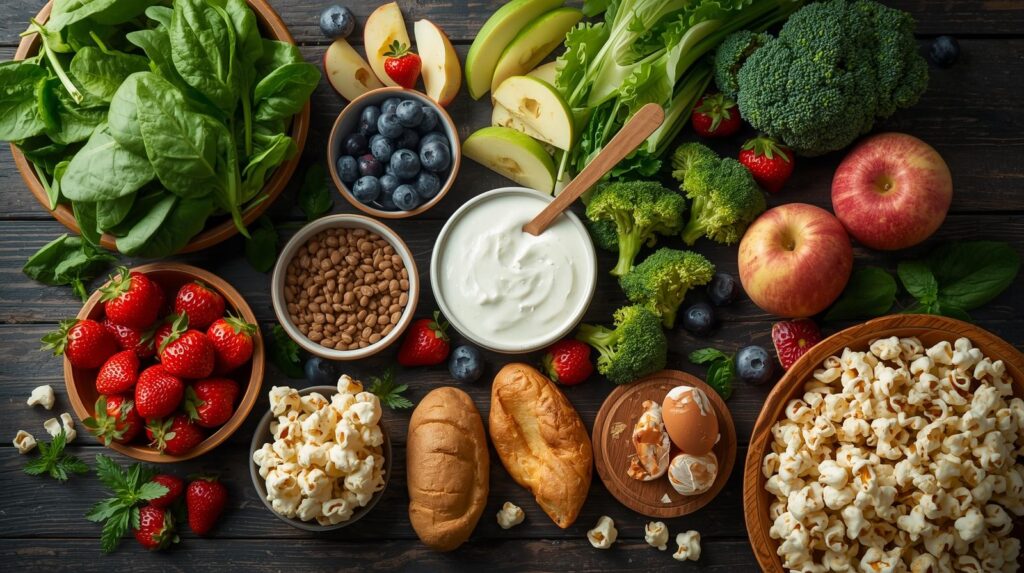
Why They Keep You Full: Leafy greens are nature’s volume hack. A massive bowl of spinach or kale takes up serious stomach space for virtually zero calories. They’re also packed with water and fiber, which slow digestion and trigger fullness signals.
How to Eat More: Use them as a base for everything. Make giant salads, add handfuls to smoothies (you won’t taste them, I promise), stuff them into sandwiches, or sauté them as a side dish. I add spinach to literally everything – eggs, pasta sauce, soups, even tacos.
Pro Tip: Don’t rely on raw greens alone for fullness. Pair them with protein and healthy fats for a balanced meal that truly satisfies.
2. Watermelon
Calories: 46 calories per cup
Why It Keeps You Full: Watermelon is 92% water. A generous two-cup serving is under 100 calories but takes up serious stomach space. The natural sweetness also helps crush sugar cravings without the calorie bomb.
How to Eat More: Keep pre-cut watermelon in your fridge for easy snacking. Add it to salads with feta and mint for a savory twist. Freeze chunks for a slushie-style treat. Grill watermelon slices for a unique side dish.
Pro Tip: Watermelon contains citrulline, which may help with muscle recovery after workouts. Perfect post-gym snack.
3. Greek Yogurt (Plain, Non-Fat)
Calories: 100 calories per 3/4 cup
Why It Keeps You Full: Greek yogurt is a protein powerhouse. A single serving packs 15-20 grams of protein, which triggers satiety hormones and keeps you full for hours. The thick, creamy texture also feels indulgent – like you’re eating dessert, not diet food.
How to Eat More: Use it as a base for smoothies, mix with berries for breakfast, substitute for sour cream in savory dishes, or create high-protein dips for vegetables.
Pro Tip: Buy plain and sweeten yourself with fruit or zero-calorie sweeteners. Flavored yogurts hide shocking amounts of added sugar.
4. Oats
Calories: 150 calories per 1/2 cup dry
Why They Keep You Full: Oats are rich in beta-glucan, a type of soluble fiber that forms a gel-like substance in your digestive tract. This slows digestion, stabilizes blood sugar, and keeps you full for hours. They’re also cheap, versatile, and endlessly customizable.
How to Eat More: Overnight oats are my favorite – mix with milk, chia seeds, and fruit, refrigerate overnight, and wake up to breakfast. Also try savory oats with egg and vegetables, or blend oats into smoothies for extra thickness and staying power.
Pro Tip: Steel-cut oats have the lowest glycemic impact, but rolled oats are perfectly healthy. Avoid instant oats with added sugar.
Pro Tip: Steel-cut oats have the lowest glycemic impact, but rolled oats are perfectly healthy. Avoid instant oats with added sugar.
5. Eggs
Calories: 70 calories per large egg
Why They Keep You Full: Eggs are the gold standard of protein quality. The combination of protein and healthy fat triggers satiety hormones and keeps blood sugar stable. Studies consistently show that egg breakfasts lead to lower calorie intake throughout the day compared to carb-heavy breakfasts.
How to Eat More: Hard-boil a batch for easy snacks. Make veggie-packed omelets. Add eggs to rice bowls, salads, and grain dishes. Poach them for a fancy weekend breakfast.
Pro Tip: Don’t fear the yolk – it contains most of the nutrients. If you’re watching cholesterol, balance is key, but for most people, whole eggs are perfectly healthy.