There’s something magical about a perfect bowl of ramen. The way the rich, complex broth clings to the noodles, the aroma of simmered bones and aromatics, the first sip that warms you from the inside out. It’s no wonder ramen has become a global obsession.
But here’s the truth that every ramen lover discovers: the broth is everything. Noodles can be perfect, toppings can be exquisite, but if the broth falls flat, the entire bowl suffers . The good news? You can create restaurant-quality ramen broth in your own kitchen.
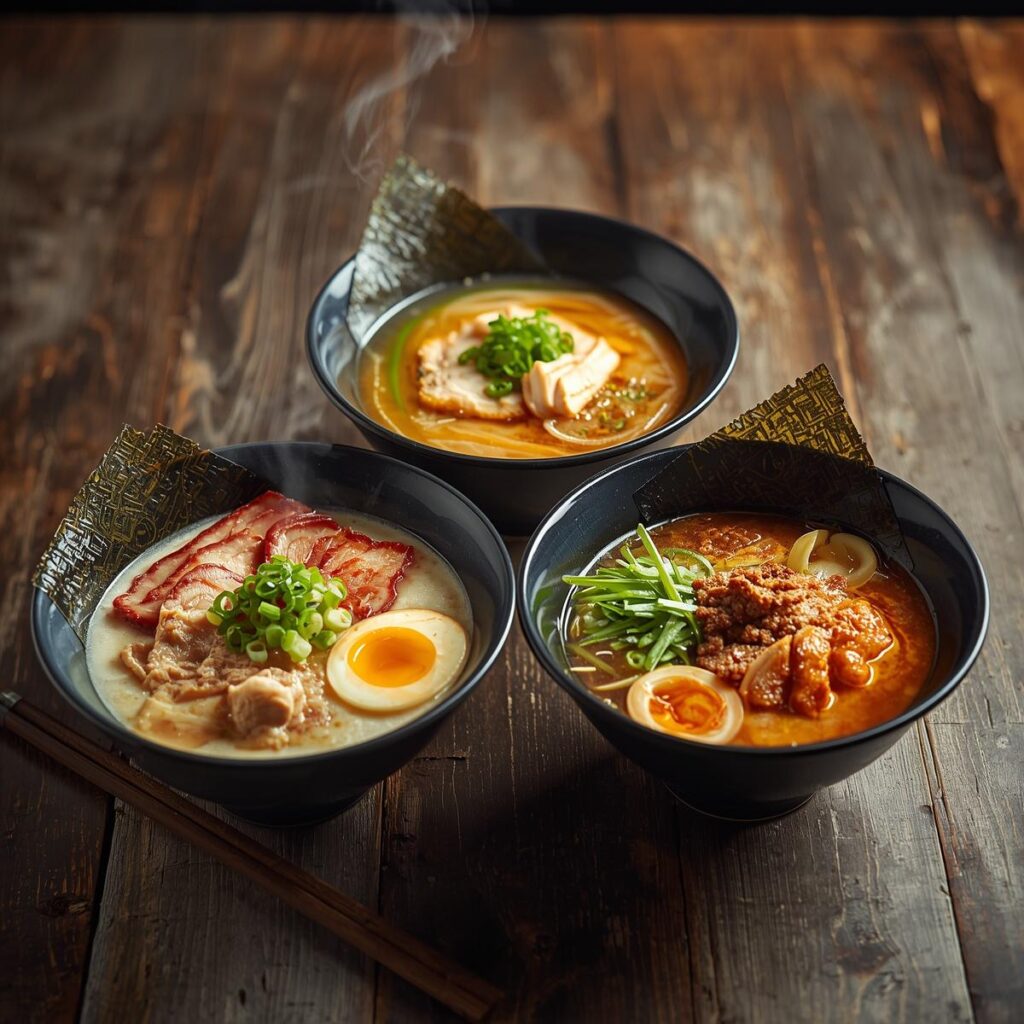
In this guide, I’m sharing three of the best ramen broth recipes:
- Tonkotsu: Creamy, porky, and indulgent – the king of ramen broths
- Tori Paitan: Rich chicken broth with a velvety texture
- Shoyu: Classic, clear, and deeply savory
Each recipe comes with detailed instructions, pro tips, and all the information you need to succeed. Let’s dive into the soul-warming world of authentic ramen broth !
The Anatomy of Great Ramen Broth
Before we start cooking, it’s important to understand that authentic ramen broth is built on a simple principle: broth provides the body, tare provides the soul .
- The Broth: This is your base – made from bones, aromatics, and water. It should be flavorful but intentionally under-seasoned.
- The Tare (pronounced tah-ray): This concentrated seasoning sauce gives each bowl its distinct character. Shoyu (soy sauce), shio (salt), and miso are the classic styles .
- The Aroma Oil: A flavored oil (like garlic or chili oil) added at the end for complexity .
When you’re ready to serve, you add tare to the bowl first, ladle the hot broth over it, and stir to combine. This gives you complete control over the final seasoning .
Recipe 1: Tonkotsu Ramen Broth (Pork Bone)
Rich, creamy, and milky-white – the gold standard of ramen broths
Tonkotsu broth is made by boiling pork bones for hours (sometimes up to 12-18 hours) to extract collagen and fat, creating that signature opaque, creamy texture .
- Preparation Time: 30 minutes active
- Cooking Time: 12-14 hours
- Servings: 8-10 (makes about 3 quarts)
- Calories: ~200-250 per serving (broth only)
Ingredients
- 3-4 lbs pork neck bones or trotters (ask your butcher to cut trotters into 1-inch disks)
- 1 chicken carcass or 2 lbs chicken backs/wings (optional, for depth)
- 1 large onion, skin on, halved
- 1 whole head garlic, halved crosswise
- 2-inch knob ginger, roughly chopped
- 2 whole leeks, washed and roughly chopped
- 6-8 dried shiitake mushrooms
- 1 lb pork fatback (optional, for richness)
- Cold water (enough to cover bones)
Tonkotsu Ramen Broth
Step 1: Blanch the Bones
Submerge pork and chicken bones in a large stockpot filled with cold water. Bring to a rolling boil over high heat and cook for 10 minutes. Gray scum will rise to the surface.
Drain the bones in a colander and rinse each piece thoroughly under cold running water, removing any dark marrow or coagulated blood. Ensure the bones appear clean and uniform in color. Clean the pot thoroughly.
Step 2: Char the Aromatics (Optional but Recommended)
While the pot heats, dry-skillet a large skillet over high heat. Add onion halves, cut-side down, and char for 3-4 minutes until deeply browned. This process imparts smoky complexity to the final broth. Garlic and ginger can also be charred briefly.
Step 3: Begin the Long Simmer
Return the cleaned bones to the clean pot. Add the charred vegetables, leeks, garlic, ginger, dried mushrooms, and pork fatback (if using). Cover with cold water, ensuring a depth of at least 2 inches.
Bring to a rolling boil over high heat, skimming off any scum that emerges during the initial 20 minutes. Once scum production ceases, reduce the heat to maintain a vigorous, rolling boil, rather than a gentle simmer. This intense boiling action is crucial for emulsifying fats and collagen, resulting in a creamy texture.
Step 4: Extended Cooking
Allow the broth to boil uncovered for 10-12 hours. Monitor the pot approximately every hour and replenish with hot water as needed to keep the bones submerged.
After approximately 4 hours, if pork fatback was included, carefully remove it with a slotted spatula and set it aside. Replace the lid and continue boiling.
Step 5: Strain and Complete
Following 10-12 hours of boiling, the broth should be opaque and possess a texture similar to light cream. Some chicken bones may have fully disintegrated.
Strain the broth through a fine-mesh sieve lined with several layers of cheesecloth into a clean pot. Discard the solids.
If pork fatback was reserved, finely chop it and whisk it into the finished broth for added richness.
Step 6: Reduce (Optional)
For a more concentrated flavor, continue boiling the strained broth over high heat until it reduces to approximately 3 quarts.
Chef’s Tips for Optimal Tonkotsu
- Do not omit the blanching step – it removes impurities and prevents an undesirable “dirty” broth flavor.
- Add water strategically – topping up with hot water throughout the process maximizes extraction.
- Prepare in advance – tonkotsu broth benefits from overnight resting and freezes well for up to 3 months.
Recipe 2: Tori Paitan Ramen Broth (Creamy Chicken)
This recipe yields a velvety, collagen-rich chicken broth that is prepared more quickly than tonkotsu. Tori paitan (chicken paitan) offers the same luxurious, creamy texture as tonkotsu but with a distinct chicken flavor. The key is a vigorous, rolling boil that emulsifies the collagen from chicken bones and feet.
- Preparation Time: 30 minutes
- Cooking Time: 2 hours
- Servings: 2-4
- Calories: ~820 per serving (with noodles and toppings)
Ingredients
- 2 lbs chicken backs, wings, and/or feet (a combination is recommended)
- 8 cups cold water
- 1 large onion, peeled and halved
- 1 whole head garlic, halved crosswise
- 2-inch piece ginger, sliced
- 4-5 scallions (white parts for broth, greens for garnish)
- 5-6 dried shiitake mushrooms
- 1 piece kombu (dried kelp), about 4×4 inches
Instructions
Step 1: Blanch the Chicken
Place chicken parts in a large pot and cover with cold water. Bring to a boil and cook for 5-10 minutes. Drain and rinse each piece thoroughly under cold water to remove all scum. Clean the pot.
Step 2: Assemble and Boil
Return the cleaned chicken to the clean pot. Add 8 cups of fresh cold water, the onion, garlic, ginger, scallion whites, dried mushrooms, and kombu.
Bring to a rolling boil over high heat. Once boiling, maintain a strong, rapid, rolling boil, avoiding a simmer. This vigorous agitation is essential for creating the creamy texture.
Step 3: The Emulsifying Boil
Cook uncovered for 90 minutes, maintaining the vigorous boil. The liquid will significantly reduce, concentrating the flavor. Add a small amount of hot water if the volume reduces by more than half.
Step 4: Remove Kombu
After approximately 30-40 minutes, remove the kombu using tongs. Extended immersion can result in a bitter broth.
Step 5: Strain and Blitz
After 90 minutes, strain the broth through a fine-mesh sieve into a clean pot, pressing on the solids to extract all liquid.
For enhanced creaminess: Use an immersion blender to process the strained broth for 30-60 seconds. This further emulsifies any remaining fat and collagen particles, producing a velvety, restaurant-quality texture.
For the Shio (Salt) Tare
- ¼ cup sake
- ¼ cup mirin
- 4 tsp kosher salt
- 2 tsp sugar
- 1 tsp rice vinegar
- 1-inch piece kombu
Combine sake and mirin in a small saucepan, bring to a simmer for 1 minute to cook off alcohol. Remove from heat, stir in salt, sugar, vinegar, and kombu. Let steep, then remove kombu before using .
Chef’s Tips for Tori Paitan
- Chicken feet are collagen powerhouses – include them if you can find them
- The blender trick transforms good broth into great broth – don’t skip it
- Pressure cooker option – cook blanched bones and aromatics on high pressure for 60 minutes, then boil vigorously for 30 minutes
Recipe 3: Shoyu Ramen Broth (Soy Sauce Base)
Clear, aromatic, and deeply savory – the classic Tokyo-style ramen
Shoyu ramen features a clear, brown broth typically made from chicken and vegetables, seasoned with soy sauce. It’s lighter than tonkotsu or paitan but packed with umami .
- Preparation Time: 20 minutes
- Cooking Time: 3 hours
- Servings: 6-8
- Calories: ~120-150 per serving (broth only)
Ingredients
- 1 whole chicken or 3 lbs chicken wings/backs
- 1 large onion, halved
- 1 carrot, chopped
- 1 piece ginger, sliced
- 4-6 cloves garlic, smashed
- 2 pieces kombu (about 4×4 inches each)
- 1 cup bonito flakes (katsuobushi)
- 12 cups cold water
For the Shoyu Tare
- 1 cup soy sauce (preferably Japanese shoyu)
- ½ cup mirin
- ¼ cup sake
- 2 cloves garlic, minced
- 1-inch ginger, grated
Instructions
Step 1: Build the Broth
Place chicken, onion, carrot, ginger, and garlic in a large pot. Cover with 12 cups cold water .
Step 2: Gentle Simmer
Bring to a boil over medium-high heat, then immediately reduce heat to maintain a gentle simmer. Skim any scum that rises in the first 30 minutes. Simmer uncovered for 2-3 hours .
Step 3: Add Kombu
In the last 30 minutes of simmering, add the kombu. Do not let it boil – boiling kombu releases bitterness .
Turn off the heat. Add bonito flakes and let steep for 5-10 minutes. Strain the broth through a fine-mesh sieve lined with cheesecloth, discarding solids .
Step 5: Make the Tare
Step 4: Add Bonito and Strain
While broth simmers, combine all tare ingredients in a small saucepan. Bring to a simmer and cook for 10 minutes to meld flavors and cook off alcohol. Set aside .
Chef’s Tips for Shoyu Ramen
- Layer your umami – the combination of chicken, kombu, and bonito creates incredible depth
- Don’t rush the simmer – 3 hours allows for full extraction without cloudiness
- Tare is everything – good shoyu tare makes good broth great
Quick Reference: Ramen Broth Styles at a Glance
Building the Perfect Bowl: Assembly Guide
Once you’ve mastered your broth, here’s how to build an unforgettable bowl of ramen :
Step 1: Prepare Your Tare
Add 2-4 tablespoons of your chosen tare to the bottom of each serving bowl .
Step 2: Cook Your Noodles
Fresh ramen noodles are best. Cook them in boiling water according to package directions (usually 2-4 minutes). Drain well .
Step 3: Ladle the Broth
Ladle 1.5 to 2 cups of hot broth into each bowl over the tare. Stir immediately to combine .
Step 4: Add Noodles
Add the cooked noodles to the broth.
Step 5: Top It Off
Classic toppings to consider :
- Protein: Chashu pork, chicken chashu, or sliced tofu
- Egg: Soft-boiled ajitsuke tamago (marinated ramen egg)
- Vegetables: Bamboo shoots (menma), corn, sautéed spinach
- Aromatics: Sliced green onions, nori seaweed
- Finishes: Chili oil, sesame oil, togarashi spice
What’s the difference between tonkotsu and paitan?
Paitan is a general term for “white soup,” referring to any rich, opaque broth made by boiling bones vigorously. Tonkotsu is a specific type of paitan made exclusively from pork bones.
Why is my ramen broth cloudy (when I want it clear)?
Cloudiness is typically a result of boiling too vigorously when aiming for a clear broth. To achieve clear broths like shoyu, it is important to maintain a gentle simmer. In contrast, for creamy broths like tonkotsu and paitan, that cloudiness is desired.
Table of Contents
Conclusion: Your Ramen Journey Starts Here
Making authentic ramen broth at home is a labor of love, but the reward is immeasurable. There’s nothing quite like that first spoonful of broth you’ve crafted yourself – the depth, the richness, the knowledge that every drop came from your own kitchen.
Start with whichever style speaks to you most. Maybe it’s the porky indulgence of tonkotsu, the velvety comfort of tori paitan, or the classic elegance of shoyu. Whichever you choose, remember that practice makes perfect. Each batch will teach you something new.
So grab your biggest pot, source the best bones you can find, and get ready to transform your kitchen into a ramen-ya. Your perfect bowl awaits.
Did you make one of these recipes? I’d love to hear about your ramen journey! Leave a comment below, share your photos, or tag me in your creations. Don’t forget to subscribe for more authentic recipes delivered straight to your inbox.
Recipe Card Summary
| Recipe | Active Time | Total Time | Difficulty | Yield |
|---|---|---|---|---|
| Tonkotsu | 30 mins | 10-12 hours | Advanced | 8-10 servings |
| Tori Paitan | 30 mins | 2 hours | Intermediate | 2-4 servings |
| Shoyu | 20 mins | 3 hours | Intermediate | 6-8 servings |