During the previous summer season, a culinary routine involving berry- or chocolate-based smoothies was identified. On a notably warm morning, a need for a cold and refreshing beverage was present. Available ingredients included a leftover cucumber, a ripe cantaloupe, and mint. These items were combined in a blender.
The resulting beverage was evaluated as exceptionally refreshing, subtly sweet, and hydrating. It was characterized by a clean flavor profile, lacking heavy creaminess or overpowering tastes, and provided an immediate sense of revitalization.
Subsequent efforts have focused on refining this recipe. The cucumber melon mint smoothie has become a regular selection for hot weather, post-exercise hydration, and occasions requiring a light yet satisfying option. With a calorie count of 215, it demonstrates that weight management smoothies can be flavorful without resembling desserts.
Recipe Details
| Preparation Time | 5 minutes |
| Total Time | 5 minutes |
| Servings | 1 |
| Calories per Serving | 215 kcal |
Ingredients
For the Smoothie:
- 1 cup (150g) cubed cantaloupe or honeydew melon, frozen
- ½ cup (75g) cucumber, peeled and chopped (about ½ small cucumber)
- ½ medium banana, preferably frozen (about 50g)
- ½ cup (120ml) unsweetened coconut water (or plain water)
- 10-12 fresh mint leaves (plus extra for garnish)
- 1 tablespoon fresh lime juice (about half a lime)
- 1 tablespoon chia seeds
- Handful of ice cubes (about 4-5)
Optional Boosters:
- ½ scoop unflavored or vanilla collagen peptides (adds ~35 calories, 9g protein)
- 1 tablespoon hemp hearts (adds ~60 calories, 3g protein)
Step-by-Step Blending Instructions
Step 1: Prep Your Ingredients
It is recommended to cube and freeze the melon for at least 2 hours prior to blending to achieve a thick texture without dilution. The cucumber can be peeled if the skin is thick or waxed; organic, thin-skinned varieties may retain their skin for nutritional benefit. If using a fresh banana, additional ice cubes can be incorporated for thickness.
Step 2: Layer in the Blender
For optimal blending, the following order is suggested:
- Liquid base: Pour in the coconut water or plain water.
- Fresh components: Add the chopped cucumber, fresh mint leaves, and lime juice.
- Frozen components: Include the frozen melon cubes, frozen banana (if applicable), and ice cubes.
- Dry components: Sprinkle in the chia seeds.
Step 3: Blend Until Smooth
Initiate blending at a low speed, gradually increasing to high. Blend for approximately 45-60 seconds until a smooth consistency is achieved, ensuring the cucumber is fully incorporated. The desired texture is thick and pourable, with a light, slushy quality. Adjust consistency by adding more coconut water one tablespoon at a time if too thick, or additional frozen melon or ice if too thin.
Step 4: Taste and Adjust
Taste the smoothie and make adjustments as needed. For increased sweetness, a few drops of stevia or a teaspoon of honey (adding approximately 20 calories) may be added. For a more pronounced mint flavor, incorporate additional mint leaves and blend briefly.
Step 5: Pour and Enjoy
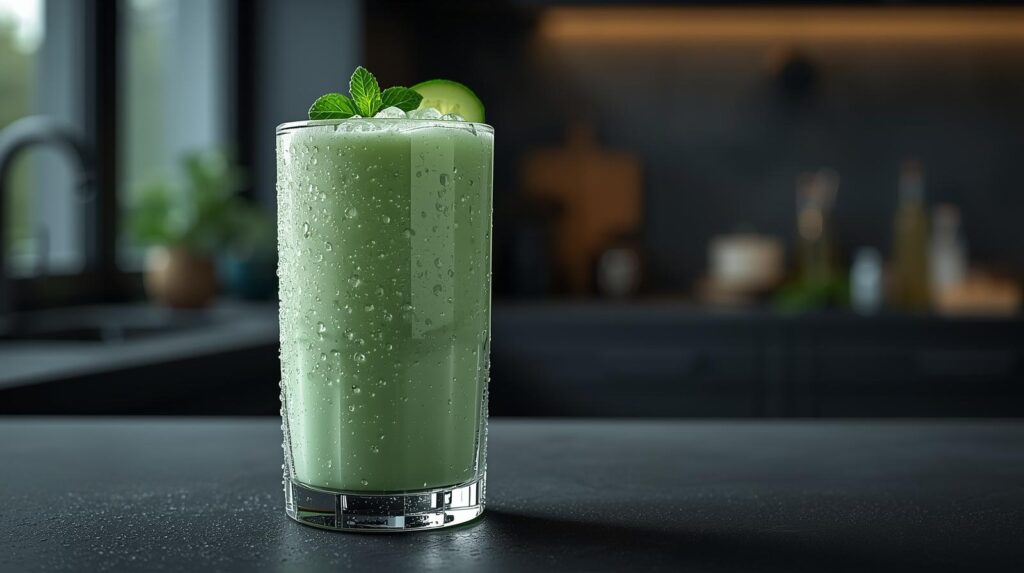
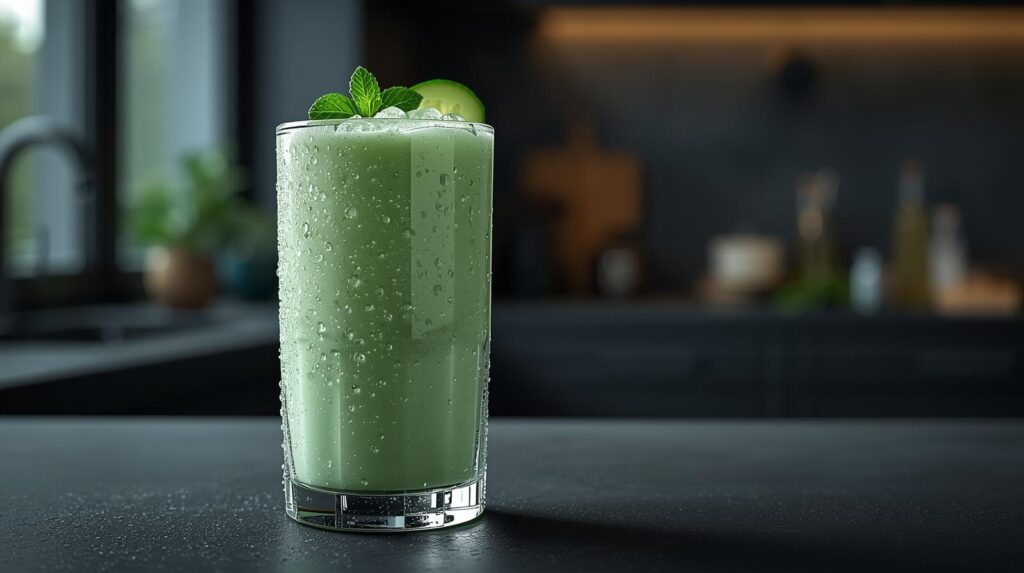
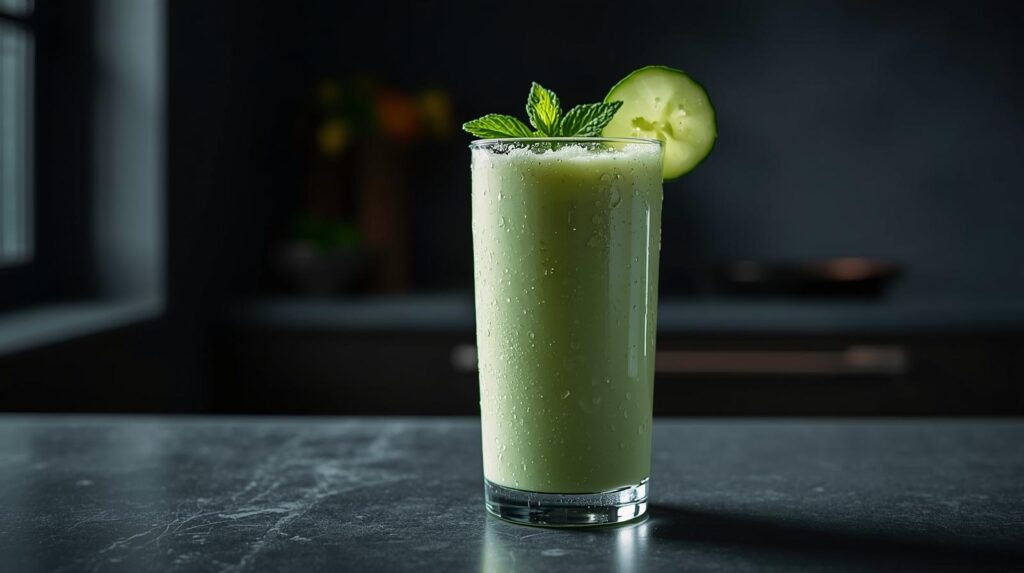
Pour the smoothie into a tall glass. Garnish with a fresh mint sprig and a thin slice of cucumber or lime on the rim. Consume immediately for the best texture and flavor, as chia seeds will continue to thicken the mixture over time.
Nutrition Facts (Per Serving)
| Nutrient | Amount |
|---|---|
| Calories | 215 kcal |
| Protein | 4 g |
| Carbohydrates | 42 g |
| Fiber | 7 g |
| Fat | 4 g |
| Saturated Fat | 0.5 g |
| Sugar | 28 g (naturally occurring) |
| Sodium | 65 mg |
| Potassium | 720 mg |
| Vitamin A | 65% DV |
| Vitamin C | 80% DV |
| Calcium | 8% DV |
| Iron | 10% DV |
Why This Smoothie Supports Weight Loss
1. Hydration and Metabolism
This smoothie provides significant hydration due to its high water content from cucumber, melon, and coconut water. Optimal hydration is integral to metabolic processes, and dehydration can negatively impact metabolism and contribute to perceived hunger. Beginning the day with this beverage can support energy levels and mitigate unnecessary hunger cues.
2. Volume and Caloric Density
With 215 calories for a 16-ounce serving, this smoothie offers a substantial volume relative to its caloric content. The inclusion of water-rich fruits and vegetables contributes to satiety by stimulating stretch receptors in the stomach, signaling fullness to the brain. This approach aligns with principles of sustainable weight management by providing a large portion size for a limited calorie intake.
Fiber Content
The smoothie contains 7 grams of fiber, contributing to sustained satiety. Chia seeds provide soluble fiber, which forms a gel in the digestive tract, slowing the rate of digestion and stabilizing blood glucose levels. The natural sugars from the melon are released gradually due to the fiber content, which can help prevent energy fluctuations that may lead to cravings.
4. Natural Sweetness and Blood Sugar Regulation
This smoothie offers natural sweetness derived from melon and banana, distinguishing it from sugary beverages that can lead to rapid blood sugar fluctuations and subsequent energy depletion. The synergistic effect of fiber, water, and natural sugars supports sustained energy levels, mitigating the insulin response associated with fat storage.
5. Thermoregulatory Properties and Stress Eating Reduction
The combination of cucumber, mint, and lime is recognized for its inherent cooling properties. A state of refreshment and reduced body temperature can diminish the propensity for stress-induced snacking. This smoothie has demonstrated efficacy in reducing the consumption of vending machine items during warmer periods.
3 Practical Recommendations Based on Experience
Tip 1: Freeze Your Melon – Seriously, Don’t Skip This
ncorporate Frozen Melon for Optimal Texture
Initial preparations using fresh melon resulted in a diluted and thin consistency. Freezing melon cubes prior to blending significantly enhances the smoothie’s texture, yielding a dense, slushy, and frosty consistency that elevates the overall experience. Maintaining a supply of frozen melon cubes is recommended for this specific recipe.
Tip 2: Don’t Skip the Mint
You might be tempted to leave out the mint if you don’t have any on hand. Don’t. The mint isn’t just garnish – it’s essential. It brightens the entire flavor profile and adds a freshness that makes this smoothie special. Without it, you just have sweet cucumber water. With it, you have something magical. Fresh mint only – dried mint won’t work here.
Tip 3: Adjust Sweetness Based on Your Melon
Cantaloupe and honeydew vary dramatically in sweetness depending on the season and ripeness. A perfectly ripe summer melon needs no added sweetness. An under-ripe melon might need a little help. Taste your melon before blending. If it’s not as sweet as you’d like, add half a frozen banana (as written) or a few drops of stevia. Don’t add sugar – it defeats the purpose.
2 Healthy Variations
Variation 1: Tropical Cucumber Cooler
Replace the melon with frozen pineapple and mango. The tropical combination pairs beautifully with cucumber and mint. This version has about 235 calories and adds bromelain from pineapple, an enzyme that may aid digestion. The flavor is brighter and more tropical – perfect for when you’re dreaming of a beach vacation.
Variation 2: Green Goddess Protein Smoothie
Add a handful of fresh spinach or kale (about 1 cup) and an extra tablespoon of chia seeds or hemp hearts. You’ll barely taste the greens – the melon and mint do an amazing job of masking them. This version bumps the fiber to 9 grams and adds iron and vitamin K. Great for post-workout recovery or when you need an extra nutrient boost.